Press Release
The studies performed in MME-MM provide an essential contribution to the scientific community, supporting the reliability, performance, and long-term stability of systems operating under extreme conditions.
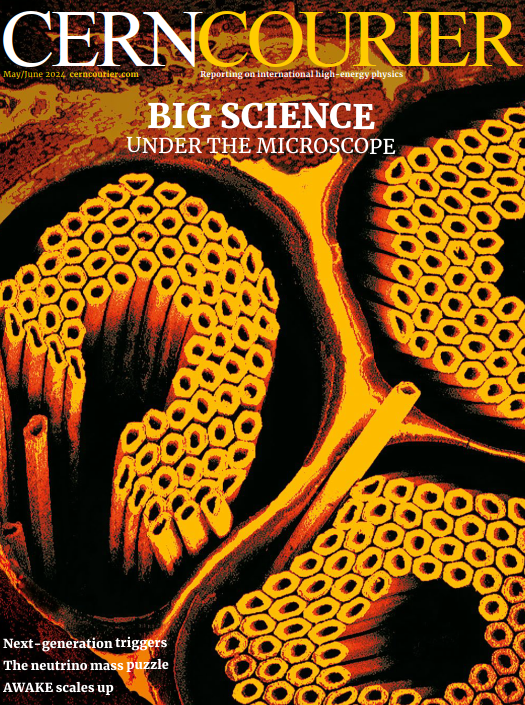
Engineering Materials for Big Science
Uncovering the fundamental laws and constituents of the universe is not just a source of fascination for particle physicists. Engineers, chemists and materials scientists draw similar motivation in meeting the challenging and strange requirements of cutting-edge accelerator and detector technologies.
The interdisciplinary materials, metrology and non-destructive testing section at CERN supports projects such as the HL-LHC magnet development with state-of-the-art equipment and analysis, and its services are increasingly in demand from projects outside – including the ITER fusion experiment (p37).
Know more: CERNCourier2024MayJun-digitaledition.pdf
Sounding Out the Universe
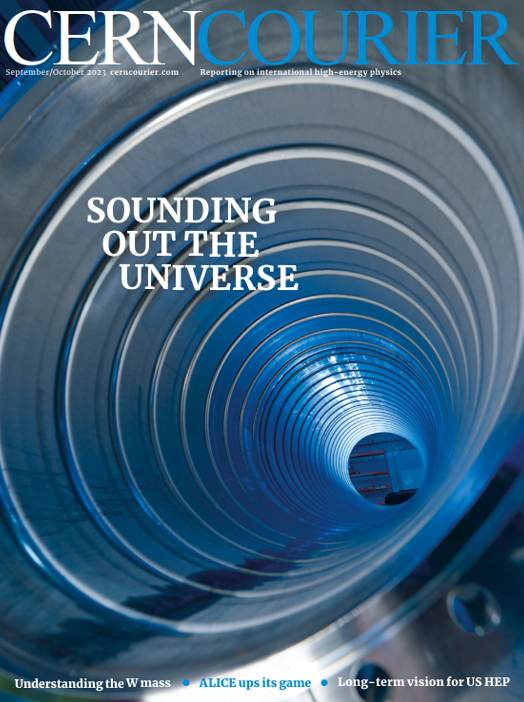
Links between particle physics and gravitational-wave science are strengthening, both in the theory realm and on the ground. A prime example is CERN’s key role in the design of next-generation gravitational-wave observatories, in particular the vacuum tubes for the proposed Einstein Telescope in Europe (p45).
Know more: CERNCourier2023SepOct-digitaledition.pdf
Advanced Alloys for Particle Accelerators
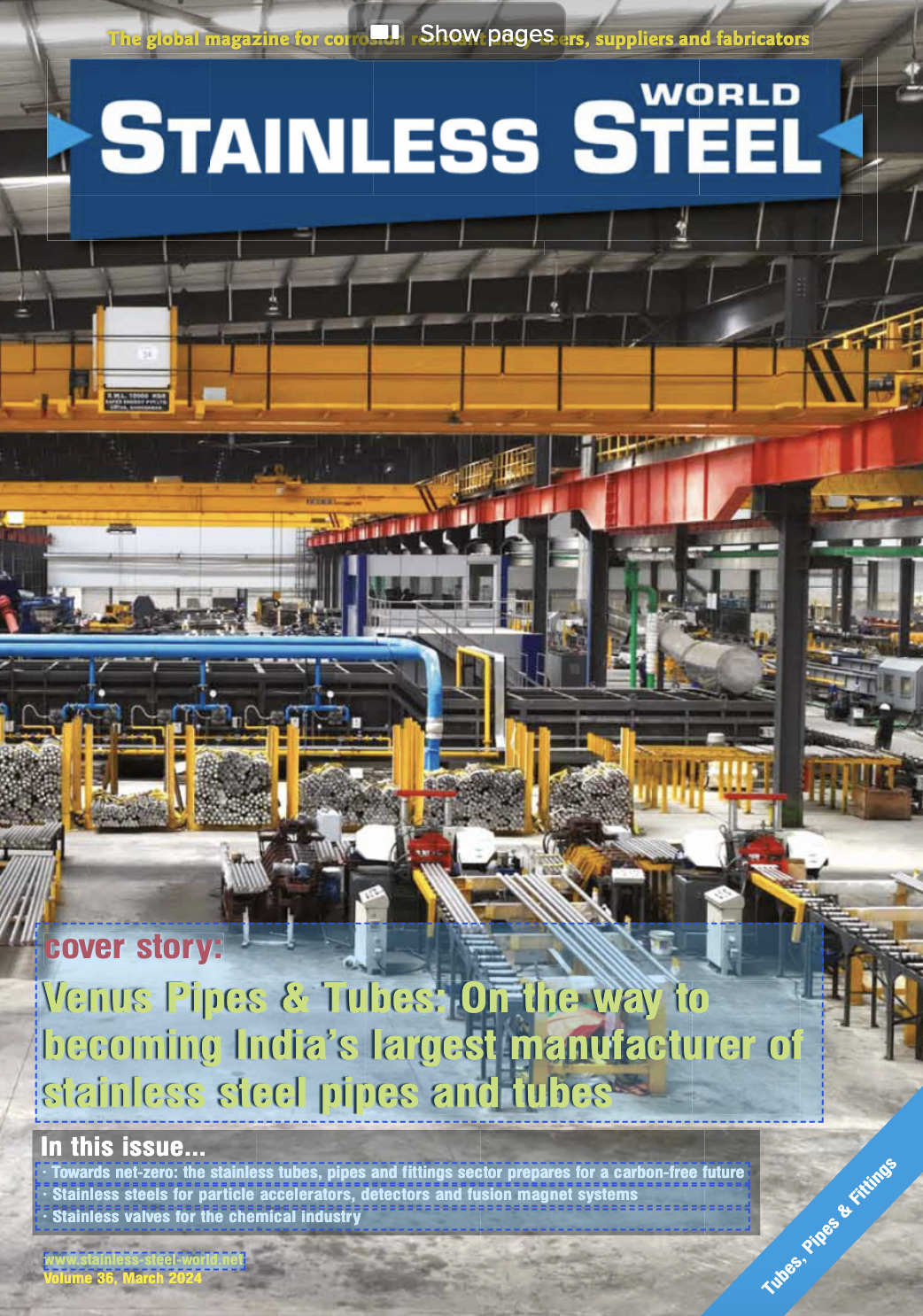
Building and upgrading accelerators such as CERN’s LHC and HL-LHC requires materials with exceptional mechanical and thermal performance, including high-grade stainless steels and nickel-base superalloys.
Our section supports this effort by performing material selection, characterization, and qualification, from cryogenic mechanical testing to microscopic and non-destructive evaluations. This expertise ensures that only materials meeting CERN’s most stringent requirements are used, enabling the reliable construction of next-generation accelerator systems and advancing high-energy physics research.
Know more: Stainless Steel World Magazine March 2024 | Seite 24
Integrating Sustainability into CERN’s Materials Procurement
In 2023, CERN took an important step toward integrating sustainability into its procurement processes by adopting an Environmentally Responsible Procurement Policy and its corresponding implementation strategy, approved by the Enlarged Directorate.
CERN’s material needs are driven by the requirements of cutting-edge research, technology, and infrastructure. The EN-MME-MM section provides consultancy and supports every day the CERN users, the CERN Standardization Committee and the CERN stores in defining high-performance material specifications with exceptional quality and unique characteristics, ensuring that scientific excellence aligns with environmental responsibility.

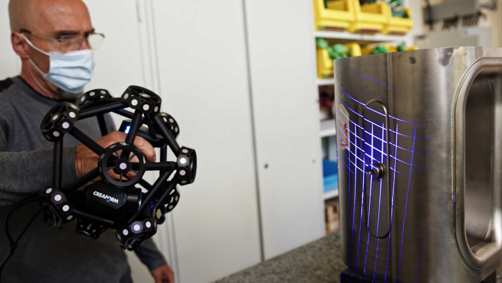
A 3D laser scanner is shaking up component inspection at CERN
In 2020, a new “recruit” joined the ranks of the metrology laboratory’s measuring devices, housed in Buildings 72 and 100. It may be less imposing in scale than the many other pieces of kit for which the laboratory is well known, such as the tomograph, but this new scanner can inspect components quickly and precisely, thanks to the 3D laser technology it uses. Know more.
X-rays see all
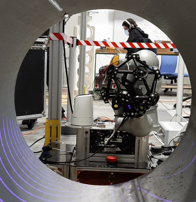
At CERN, X-ray tomography allows engineers and scientists to visualize the internal structure of components without cutting or damaging them. The technique provides micrometric 3D imaging used to detect cracks, voids, or manufacturing defects in accelerator and detector parts.
This capability supports quality assurance, failure analysis, and material development, reinforcing CERN’s leadership in advanced non-destructive evaluation methods. Know more.
The microscope that digs deep for answers
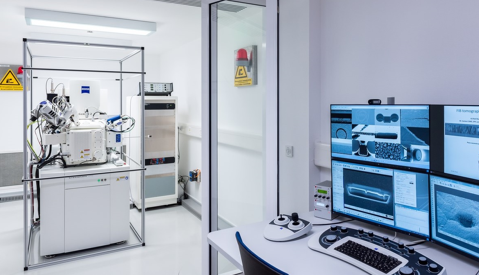
CERN’s advanced microscopy facilities combine focused ion beam (FIB) and scanning electron microscopy (SEM) to investigate materials at the micro- and nanoscale.
These techniques reveal the structure, composition, and defects of accelerator and detector components, helping engineers understand performance issues or failure mechanisms.
Such analyses, carried out by the EN-MME Materials and Microscopy team, provide essential insights that guide design improvements and material optimization across CERN projects.
FIND OUT MORE
Keen to learn more about our activities?
Find out what the Material, Metrology and NDT Unit can do for you.