
NDT Use Cases
Radiographic Inspection on-site at LHC
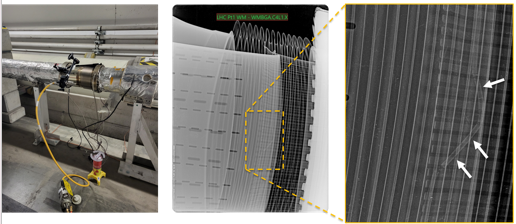
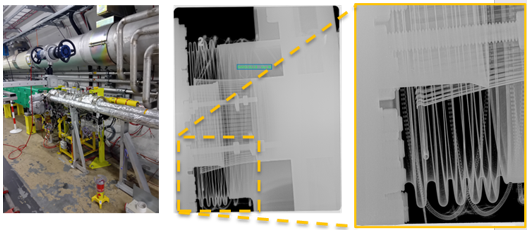
- EN-MME-MM specialists regularly perform on-site radiographic inspections to verify the correct operation of key components in the LHC tunnel without dismantling (see X-ray tests: Night at the collider | CERN). Additionally, they can also intervene following abnormal operation occurs in the LHC.
- In May 2023, after reports of slow local beam losses near Point 1, radiography revealed that an RF-finger module was heating or arcing, degrading the vacuum and driving the losses. Rapid identification of the fault enabled immediate corrective action and the restoration of stable LHC operation. More details here: https://home.cern/news/news/accelerators/accelerator-report-overcoming-setbacks-antiprotons-return-lhc-recovers
- In July 2025, a brief rise in vacuum pressure at Point 2 triggered another investigation. Radiographic inspection showed that the spring of an RF module had lost tension, no longer ensuring reliable electrical contact. Again, fast diagnostics allowed the teams to address the problem before it escalated. More details here: https://home.cern/news/news/accelerators/accelerator-report-summer-hot-spells-lhc
- These interventions highlight the critical role of EN-MME-MM’s non-destructive testing capabilities, enabling rapid troubleshooting and ensuring the safe, reliable operation of the LHC.
Quality Control of the HL-LHC Cryogenic Distribution Line Installation
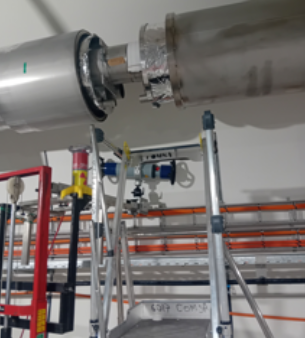
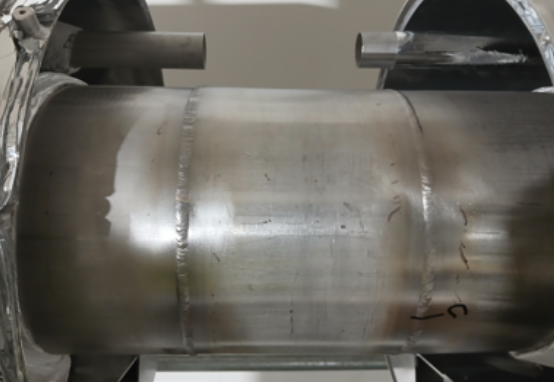
- EN-MME-MM specialists regularly perform on-site radiographic inspections to verify the correct operation of key components in the LHC tunnel without dismantling (see X-ray tests: Night at the collider | CERN). Additionally, they can also intervene following abnormal operation occurs in the LHC.
- In May 2023, after reports of slow local beam losses near Point 1, radiography revealed that an RF-finger module was heating or arcing, degrading the vacuum and driving the losses. Rapid identification of the fault enabled immediate corrective action and the restoration of stable LHC operation. More details here: https://home.cern/news/news/accelerators/accelerator-report-overcoming-setbacks-antiprotons-return-lhc-recovers
Radiographic Inspection of CO₂ Cooling Systems for ATLAS
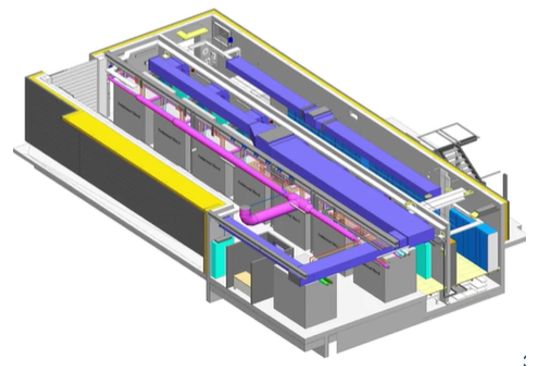
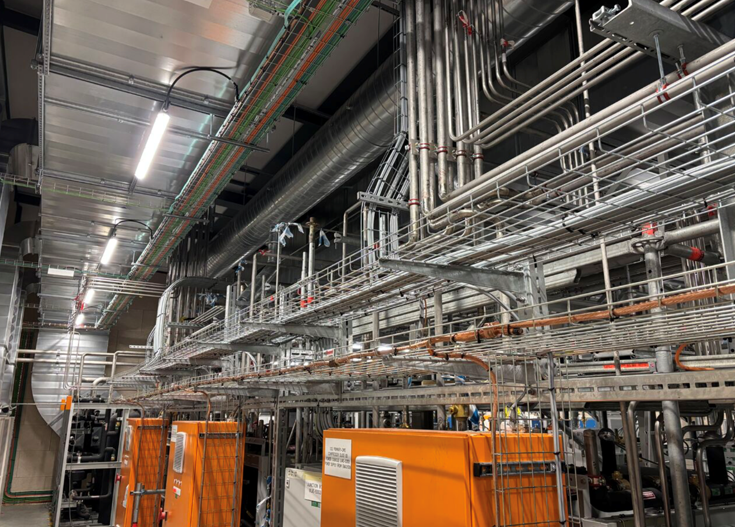
In June 2025, the EN-MME-MM team completed an extensive series of radiographic inspections in SXSN1, the ATLAS CO₂ cooling building, where several hundred welds were examined.
These inspections ensured the integrity and leak-tightness of the next-generation CO₂ cooling system, which will serve the upgraded ATLAS and CMS detectors.
This work highlights the critical role of non-destructive testing (NDT) in guaranteeing the safety and long-term performance of CERN’s experimental infrastructure. More information here: Next-Generation CO₂ Cooling Systems Powering the Future of ATLAS and CMS | EP News
FIND OUT MORE
Keen to learn more about our activities?
Find out what the Material, Metrology and NDT Unit can do for you.
- Find out more about our scientific work→