
Material Science Use Cases
Rapid Diagnosis of Vacuum Leak in LHC

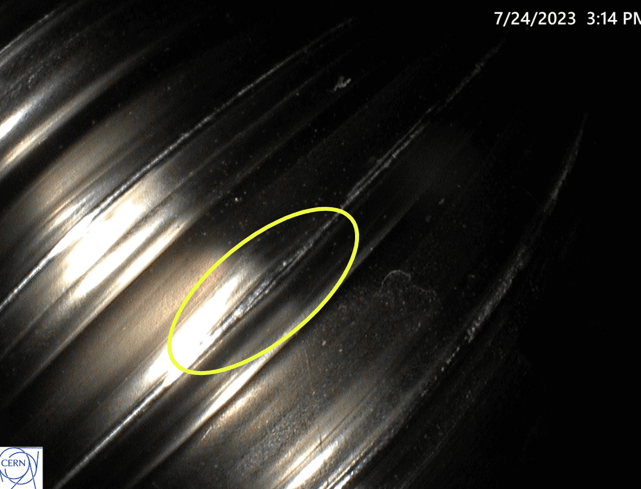
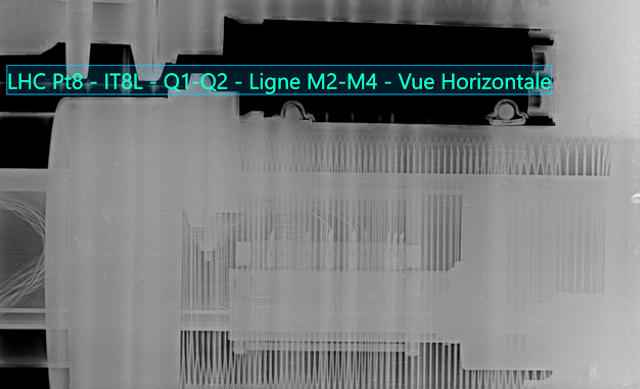
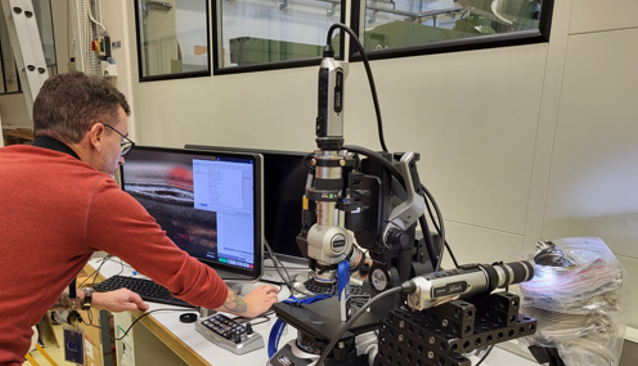
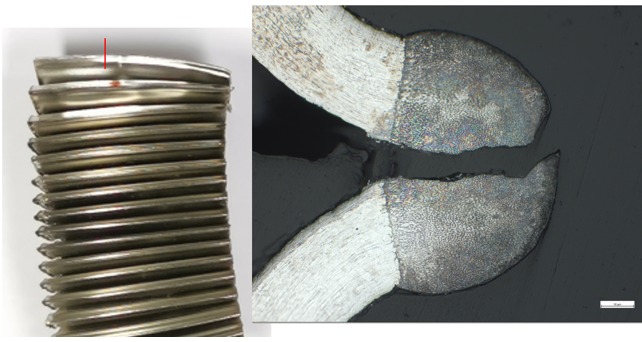
In July 2023, an electrical disturbance caused several superconducting magnets in the LHCb interaction region to quench, resulting in a vacuum leak in the inner triplet magnets and threatening to interrupt the LHC physics program.
Within days, our experts used on-site visual inspection and industrial radiography to localize the failure, identified in the form of a 2 mm-long crack in the corrugation of a vacuum bellow to the left of Point 8.
Subsequent microscopic analyses determined the root cause of the failure, enabling a rapid repair and supporting the consolidation plan approved for Long Shutdown, which will ensure safer and more reliable operation in future runs.
Niobium for the Future Circular Collider (FCC)
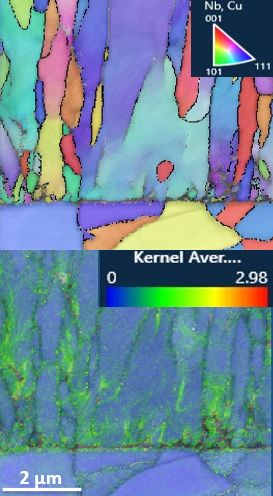
As part of the Future Circular Collider (FCC) study, EN-MME-MM is developing advanced niobium coatings for superconducting radio-frequency (SRF) cavities, key components operating below 2 K to maximize energy efficiency.
Using bipolar HiPIMS deposition and advanced characterization methods such as FIB, SEM, EBSD, and X-ray diffraction, researchers investigate film microstructure, texture, and residual stress.
This work supports the optimization of Nb thin films, enabling more cost-effective SRF technologies and contributing to the design of next-generation accelerators.
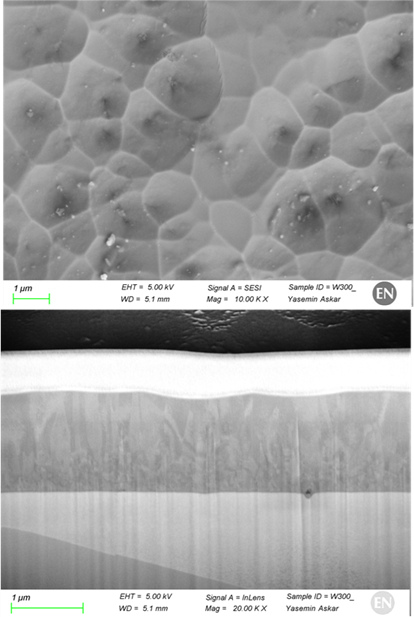

Understanding the Root Cause of Leakage on Brazed Water-Cooling Conducts
PSB had a reliable operation over nearly 50 years and in the last three years five water leaks were detected and repaired or the magnet replaced with spare component.
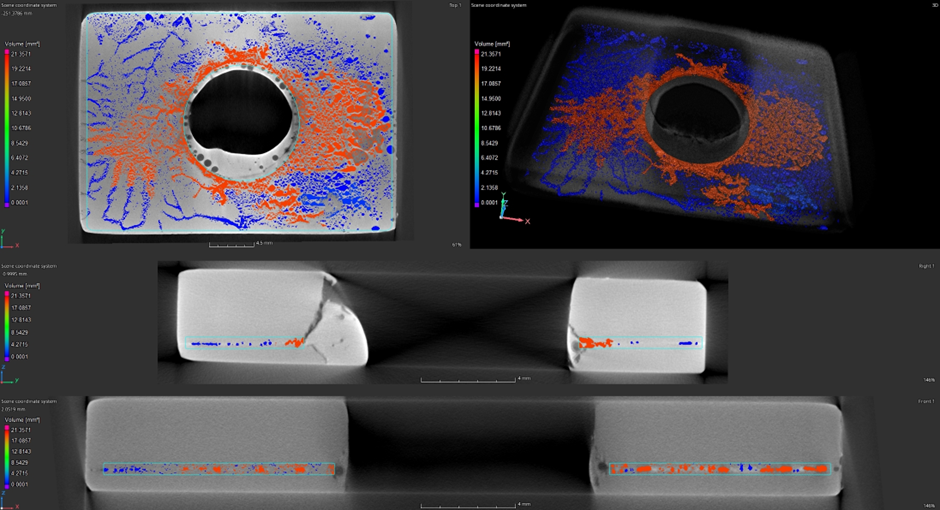
Non-destructive testing and microscopic analysis of extracted samples revealed galvanic corrosion at the Cu–Sil-Fos braze interface and within the braze metal. Corrosion products on conduit surfaces matched particles in the water, suggesting Automated Particle Analysis (APA) could detect such issues in less accessible cooling circuits within the CERN accelerator complex specially in less accessible locations or where sample extraction is impossible.
Oxygen Control in Nb₃Sn Wires
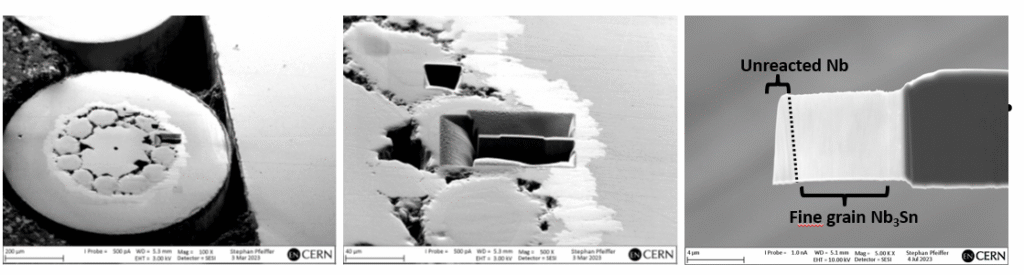
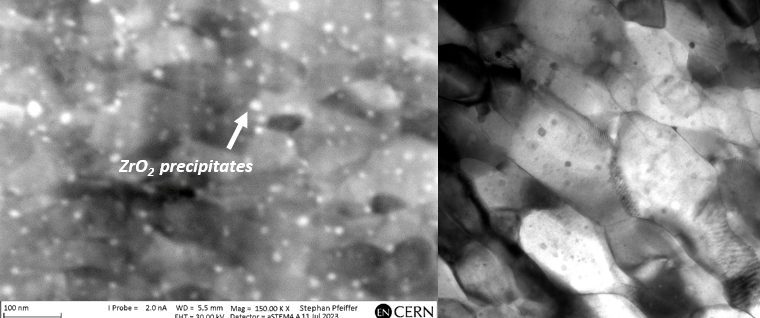
- A CERN–UNIGE collaboration investigated how introducing a uniform oxygen source (OS) during thermal treatment affects Nb₃Sn superconducting wires.
- The study showed that oxygen distribution refines the Nb₃Sn grain size, leading to a significant increase in critical current density (Jc) at 4.2 K.
- This microstructural insight supports the optimization of high-performance conductors for next-generation superconducting magnets.
FIND OUT MORE
Keen to learn more about our activities?
Find out what the Material, Metrology and NDT Unit can do for you.
- Find out more about our scientific work→